UBM at CC:
Research Opportunity in Mathematical Biology
What is it?
CC was recently awarded a "UBM" grant from the National Science
Foundation to train undergraduate researchers in mathematical
biology. Over the next three years, eight faculty and sixteen
students will work on a variety of research problems that involve
applying mathematical techniques to biological and environmental
problems. Biology is becoming more quantitative these days, and
mathematical biology is one of the hottest areas in science. We
will be recruiting CC students to work on summer research projects and
participate in other activities, including independent study and travel
to conferences.
Who are we looking for?
We think the ideal time to carry out this kind of research is in the
summer between your junior and senior years. Thus, we are looking
for juniors majoring in math, biology, environmental science, or
related fields. Sophomores with strong interest will also be
considered. No previous experience in mathematical biology is
necessary. Your research will push the frontiers of what is
known, so the most important characteristics are curiosity, the
willingness to take on new challenges, and the ability to play well
with others.
What are you commiting to?
Your summer research will require a commitment of 10 weeks. You
will be paired with another student whose skills are complementary to
yours. The two of you will work with a pair of faculty (a
biologist and a mathematician). During the summer you will
meet periodically with the other UBM research groups at CC to share
your
progress. In addition, we want you to take an independent study
course during the spring semester to learn more about the subject area
and techniques that you will need. Finally, you will enroll in a
new adjunct course the following fall - this will be a biweekly seminar
in which we discuss interesting articles, career opportunities, and
host visiting scientists.
What will you get out of it?
Besides a warm and fuzzy feeling for contributing to the advancement of
science? Well, for starters you will be paid a stipend of
approximately $5500 during the summer (the exact amount will depend on
IRS withholding requirements). You and the other students will
travel to the annual Society for Mathematical Biology meeting, which is
in Toronto next summer (all expenses paid). You will get to
broaden your horizons and find out if mathematical biology is a field
you would like to pursue. You'll get to network with other
students, and meet with leading scientists in the field. Research
experience in this area is sure to look good on your resume, whether
you go to graduate school or into government or industry.
What is the research about?
There are four projects:

1) Bacterial genetics (faculty: David Brown and Phoebe Lostroh)
2008 and 2010
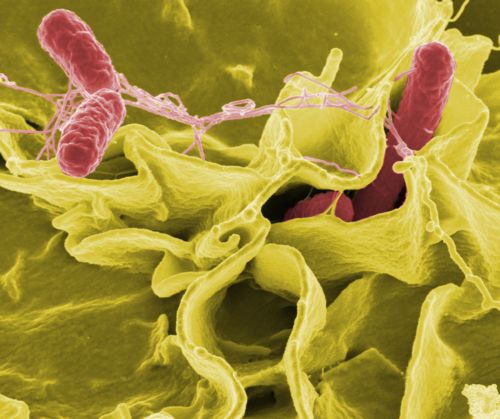
This project will study how Salmonella
bacteria "decide" when it is time to invade
host cells. You will develop a mathematical model of the
network of genes involved in
processing information about the environment and regulating the
production of virulence factors.

2) Owl demographics (faculty: Steven Janke and Brian Linkhart) 2008 and
2009
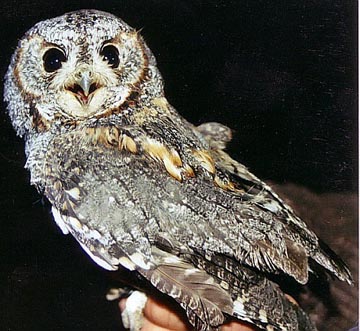
This project will study the population dynamics of
the flammulated owl, a species of small migratory owls that spend the
summer in the Rocky Mountains. The owls migrate each winter to
Central America, and both their summer and winter habitats may be
threatened by development. You will develop mathematical and
statistical models to "fill in" some of the missing information about
the owl's life history, and predict the impact of habitat loss.

3) Algebraic phylogenetics (faculty: Ralph Bertrand and Amelia Taylor)
2008 and 2010
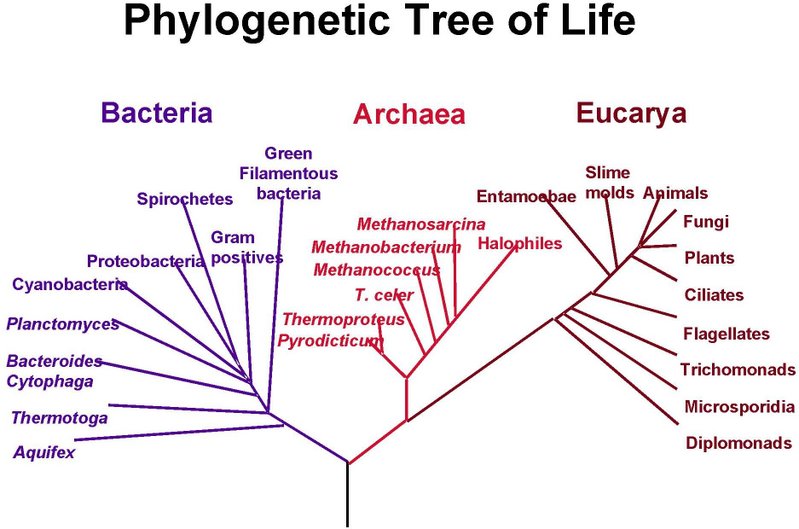
Phylogenetics is the study of evolutionary history
by building family trees. Scientists take data such as DNA
sequences from different organisms, and use them to construct a tree
showing the probable relationships among them. There are several
methods for doing this, and they are all computationally intensive and
imperfect. Recently, mathematicians have discovered a new method
that uses abstract algebra. On this project you will help
implement this new approach, and apply it to infer the evolutionary and
migratory history of humans from Southeast Asia.

4) Plant-insect mutualisms (faculty: Miro Kummel) 2009 and 2010
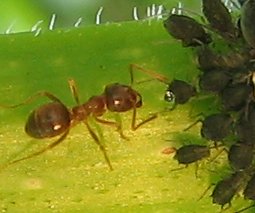
Yucca plants are host to a fascinating community of
insects: aphids supply food to ants, which protect them from
ladybugs. The communities on different plants are linked to each
other through dispersal of the insects. Little is known
about the spatio-temporal dynamics of systems like this: How stable are
they? How do the dynamics on one plant affect another plant? You
will develop a mathematical model to address these and other questions.
How can you get involved?
Contact David Brown in the math department to find out more
about the overall program,
or talk to any of the faculty to learn about their project. To
apply, please send your transcript, a brief (< 1 page)
description of your motivation and interests, and a letter of
recommendation from a CC professor to David Brown by the
beginning of block 4. Please indicate which project(s) you would
be most interested in working on.